
Podcast: Play in new window | Download
Subscribe: RSS
Today’s global meat consumption is more than double what it was in the late 1980s. At the same time, animal agriculture is the largest driver of deforestation, biodiversity loss, and antimicrobial resistance — and a major contributor to water stress. Despite decades of advocacy around health, climate, and animal welfare, demand for meat continues to rise.
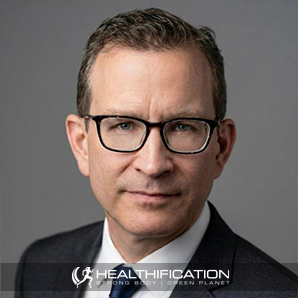
Bruce Friedrich argues that the solution isn’t persuading billions of people to change their values. It’s giving them better options.
Before founding the Good Food Institute, Bruce spent 15 years with PETA and 4 years at Farm Sanctuary. He has been deeply immersed in animal advocacy and understands the moral urgency firsthand. His focus on plant-based and cultivated meat isn’t a retreat from that mission — it’s his conclusion about what can work at global scale.
In his new book MEAT, he makes the case that plant-based and cultivated meat represent the next agricultural revolution — one that could dramatically reduce land use, climate risk, pandemic threats, and antibiotic overuse, while producing meat that competes on taste and price.
In this conversation, we explore why meat consumption keeps climbing, the inefficiencies built into our food system, why advocacy alone hasn’t bent the curve, the science behind replicating animal protein, whether cultivated meat can truly reach price parity, and why some of the world’s largest meat companies — and governments — are investing heavily in alternative proteins.
This is a discussion about innovation over ideology — with someone who has dedicated his life to ending animal suffering — realism over wishful thinking, and what it will actually take to feed a growing world without destroying it.
-
Why has more than 50 years of meat-reduction advocacy from the health, environmental, and animal protection communities not shifted humanity’s upward meat consumption trajectory?
-
Alt meats can make that advocacy more effective. Give people an easy, satisfying swap, and the ethical and environmental arguments land with more force. We need both.
-
Most people don’t change their habits because of ethics, they change because a better option comes along.
-
The basic inefficiency of meat: energy, land, water.
-
Antimicrobial Resistance (AMR) > 70% of antibiotics critical for human medicine are used to promote faster growth or prevent disease in animals raised for food.
-
How plant-based and cultivated meat can alleviate hunger and malnutrition, mitigate climate change and biodiversity loss, and lower antimicrobial resistance and pandemic risk.
-
The science behind creating plant-based and cultivated meat that is indistinguishable from conventional animal meat.
-
On the key metrics that define why UPFs are unhealthy, most of meatiest plant-based meats come out far ahead.
-
Why food security is national security.
-
Alternative proteins require less land and less water than animal agriculture, and they’re far more adaptable in the face of environmental volatility.
-
Why the world’s largest food and meat giants are enthusiastic about the development of alternative meats that rival conventional meat in taste, price, nutrition, and food safety.
-
The governments that are prioritising alternative meat innovation.
-
How scientific breakthroughs are often met with skepticism, because early iterations are expensive and not especially functional. But products improve and prices fall.
-
How what behavioural economist Daniel Kahneman calls system 1 & system 2 thinking could explain some of why human beings are so resistant to dietary change?
-
Do the world’s top cultivated meat scientists believe cultivated meat can reach price parity with conventional meat and what do they see as the key hurdles?
Reading MEAT: How the Next Agricultural Revolution Will Transform Humanity’s Favorite Food—and Our Future helped put some puzzle pieces together for me — especially around why progress toward a vegan world can feel so frustratingly slow, despite the tireless work of passionate advocates.
It reminded me of when I first read Dr. Will Tuttle’s The World Peace Diet. That book helped me understand something fundamental: that a truly peaceful and conscious society will never be possible while the immense suffering and environmental destruction of animal agriculture continues.
The approaches Bruce Friedrich and the Good Food Institute take, and the approach Dr. Tuttle articulates, could not look more different on the surface.
Dr. Tuttle invites humanity to expand its compassion — what he calls ethical intelligence: the capacity to recognise suffering and feel compelled to relieve it.
Bruce’s approach is more pragmatic. If humanity loves meat — and clearly it does — then the path forward may be to give people the same experience they crave, just produced in a radically different way.
The more I thought about it, the more these approaches didn’t feel contradictory. They feel complementary.
One works by expanding awareness and compassion. The other works by working with human behaviour, economics, and technological progress.
And perhaps real change happens when those forces begin to meet.
That’s it for this week in Healthification.
This journal and daily planner follows a twelve month format however is not dated so it is perfect to use at ANY time of the year.
Connect with Kate across the socials: Facebook | Twitter | Instagram | LinkedIn | YouTube and her Skool Community, Plant Positive.
With love and gratitude plant friends.


 EATING PLANT BASED IS SO MUCH EASIER THAN I EXPECTED!